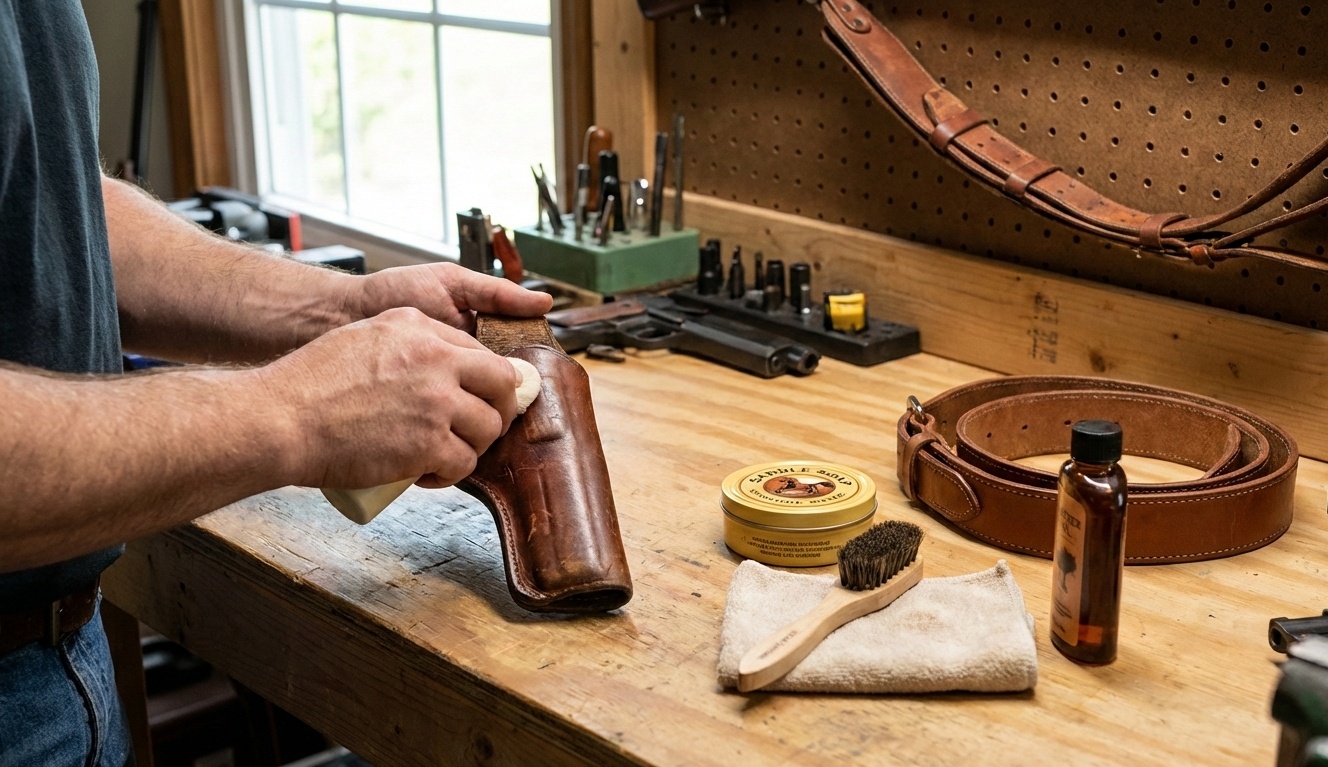
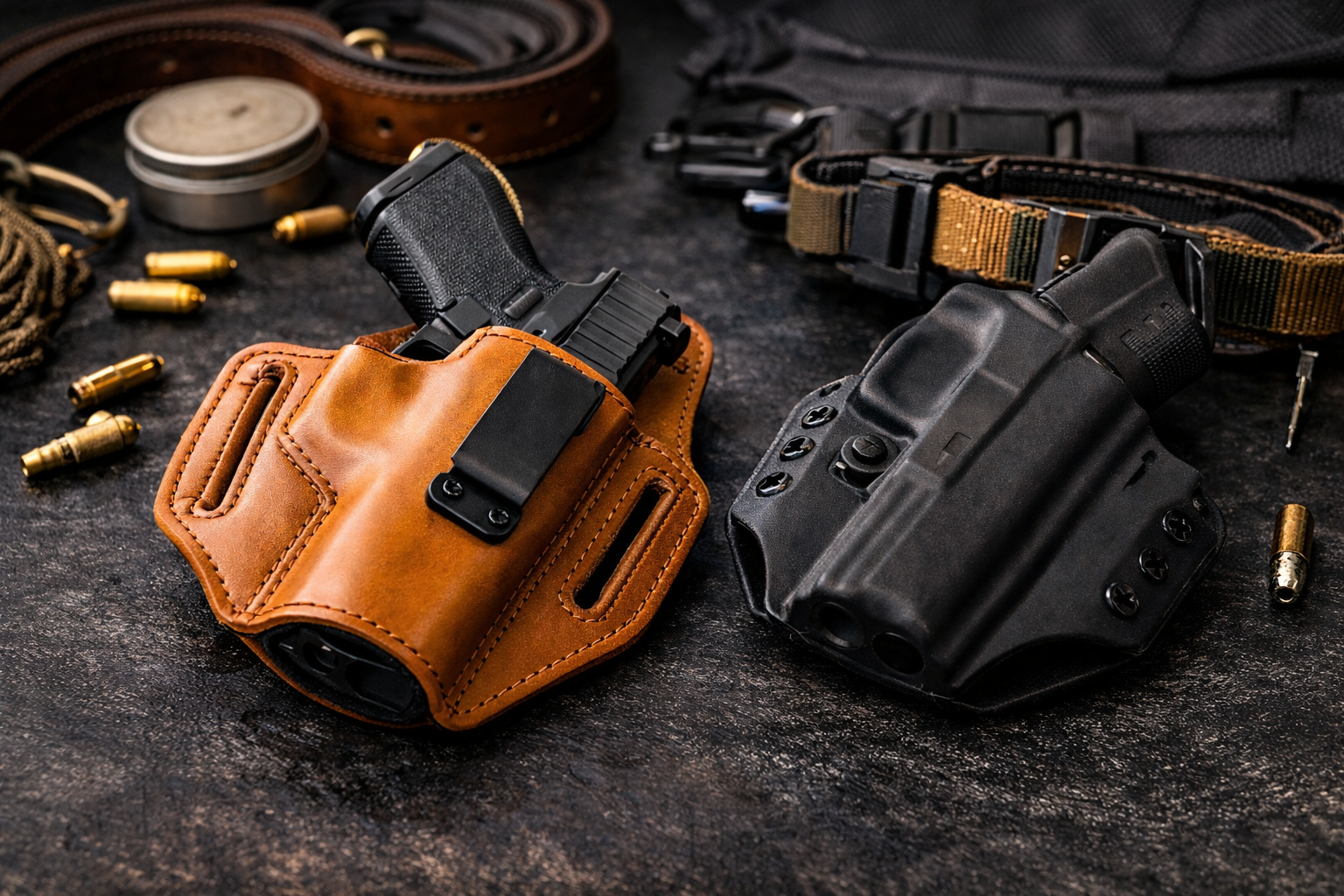
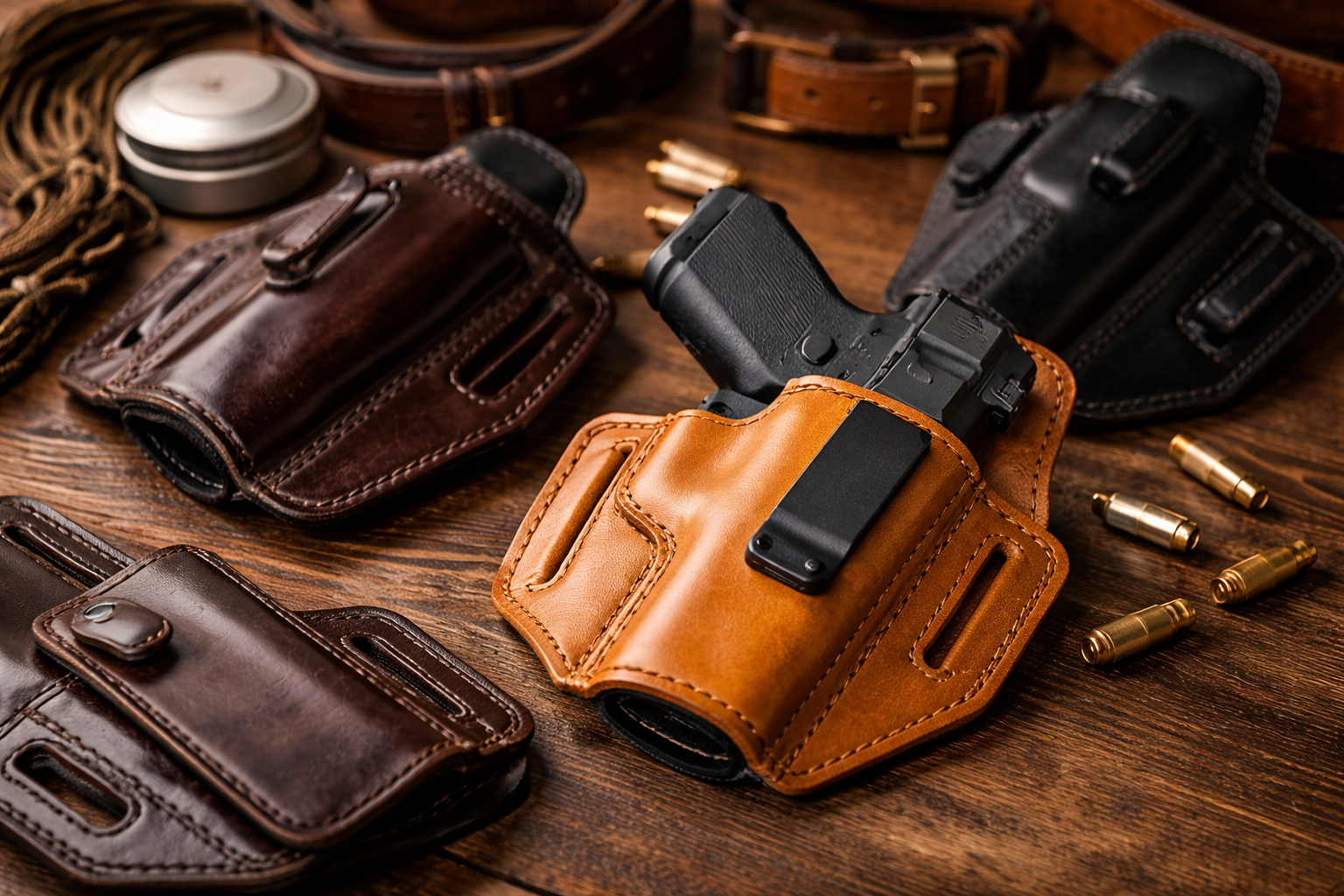
Leather firearm gear is built to work hard. Holsters, belts, magazine carriers, and K9 equipment face daily friction, heat, sweat, and movement. With the right care, quality leather holds its shape, strength, and appearance for years.
Neglect shortens lifespan. Simple habits protect your investment and preserve safety, retention, and comfort.
This guide covers practical care methods used by long-time carriers and craftsmen.
Why Leather Needs Ongoing Care
Leather is a natural material made from tightly packed fibers. These fibers remain strong when properly hydrated and protected.
Without care, leather can:
- Dry out and crack
- Lose retention shape
- Absorb odors
- Weaken at stress points
- Stiffen and become uncomfortable
Regular maintenance prevents these problems before they start.
Basic Weekly Cleaning Routine
You do not need special tools to keep leather clean.
Step 1: Empty the holster
Remove the firearm and check that the chamber is clear.
Step 2: Dry wipe
Use a soft cloth to remove dust, lint, and surface debris from both inside and outside.
Step 3: Light damp wipe
If needed, use a slightly damp cloth. Avoid soaking the leather.
Step 4: Air dry
Allow the gear to dry naturally at room temperature.
Never place leather near heaters, sunlight, or vehicle dashboards.
Conditioning: How Often and Why It Matters
Conditioning restores oils that keep leather flexible and strong.
Frequency
- Light use: every 3–4 months
- Daily carry: every 1–2 months
- Hot or dry climates: more often
How to condition properly
- Apply a small amount of leather conditioner to a cloth
- Rub gently in circular motion
- Let absorb for 10–15 minutes
- Wipe off excess
Use products made for firearm leather or saddlery. Avoid petroleum-based oils.
What to Avoid Using on Leather Gear
Some products damage leather fibers or soften structure too much.
Avoid:
- Silicone sprays
- Mink oil for holsters
- Saddle soap for frequent cleaning
- Household cleaners
- Alcohol wipes
- Baby wipes
These can weaken retention and stitching.
Dealing With Moisture and Sweat
Sweat exposure is unavoidable with everyday carry.
After heavy sweating or rain:
- Remove the firearm
- Wipe the leather dry
- Let air dry fully
- Apply light conditioner after drying
Never store wet leather in sealed containers.
Maintaining Retention Shape
Holster safety depends on shape.
To protect retention:
- Avoid over-conditioning
- Do not stretch intentionally
- Store with firearm removed
- Keep mouth reinforcement dry
If retention loosens, consult the maker before attempting reshaping.
Storage Best Practices
Proper storage prevents long-term damage.
Short-term storage
- Cool, dry area
- Open airflow
- Firearm removed
Long-term storage
- Cloth bag or open shelf
- Silica packet nearby
- No plastic bags
- No foam cases
Plastic traps moisture and causes mildew.
Stitching and Hardware Checks
Inspect monthly for:
- Loose threads
- Frayed edges
- Cracked belt loops
- Bent clips
- Rust on rivets or snaps
Early repair extends life far more than replacement.
Cleaning Interior of Holsters Safely
Lint buildup inside holsters affects draw smoothness.
Safe method:
- Use compressed air
- Soft brush
- Dry cloth
Avoid liquid inside molded areas.
Climate Considerations
Hot climates
- Condition more often
- Avoid vehicle storage
- Increase drying time
Cold climates
- Allow gear to warm slowly indoors
- Avoid flexing frozen leather
Humid climates
- Use dehumidifier
- Store with silica packets
- Increase air circulation
Maintenance Schedule Table
| Task |
Frequency |
| Dry wipe |
Weekly |
| Damp wipe |
As needed |
| Condition |
Every 1–3 months |
| Stitching check |
Monthly |
| Deep inspection |
Every 6 months |
Common Care Mistakes
- Soaking leather to clean it
- Over-conditioning
- Using heat to dry
- Storing loaded holsters
- Leaving gear in hot vehicles
- Applying oil inside holsters
These shorten lifespan and reduce safety.
Long-Term Benefits of Proper Care
Consistent maintenance provides:
- Stable retention
- Safer trigger coverage
- Improved comfort
- Strong stitching integrity
- Better appearance
- Higher resale value
- Reliable daily performance
Final Thoughts
Leather firearm gear performs best when treated like working equipment, not decoration.
Ten minutes a month prevents years of damage. Clean gently, condition lightly, dry naturally, and store properly.
Well-maintained leather grows more comfortable over time while staying strong where it matters most. Safety, reliability, and longevity all start with simple care.