
Loading ...
Durability decides how gear performs after months of wear, heat, moisture, pressure, and repeated handling. For everyday carry equipment, K9 gear, belts, and holsters, material choice shapes safety, comfort, and long-term value.
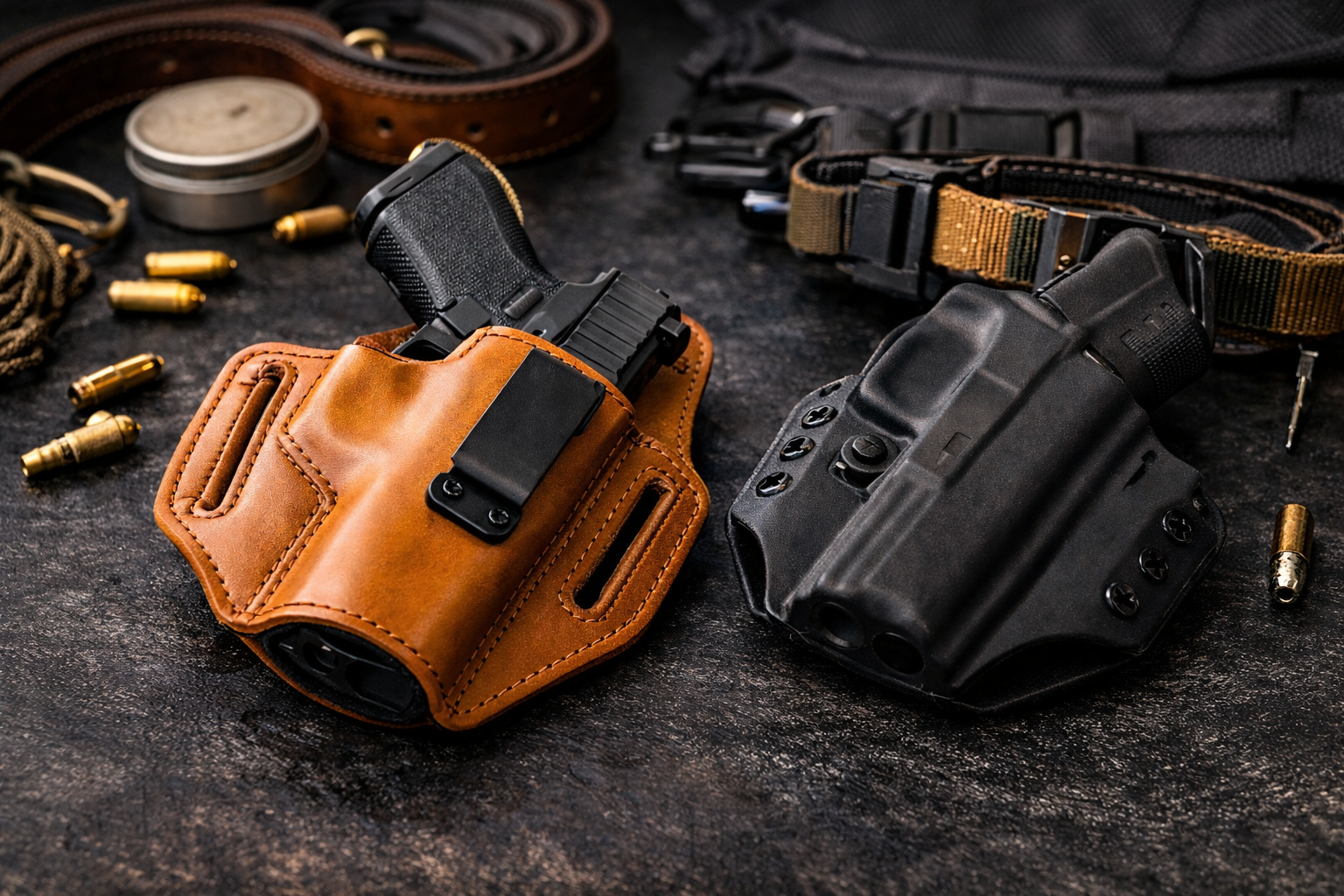
Leather and synthetic materials both appear across modern gear catalogs. Each brings its own strengths, maintenance needs, and lifespan patterns. This guide breaks down how both materials perform under real working conditions, not showroom lighting.
Longevity depends on more than product labels. Gear experiences stress from:
Materials react differently to each of these factors.
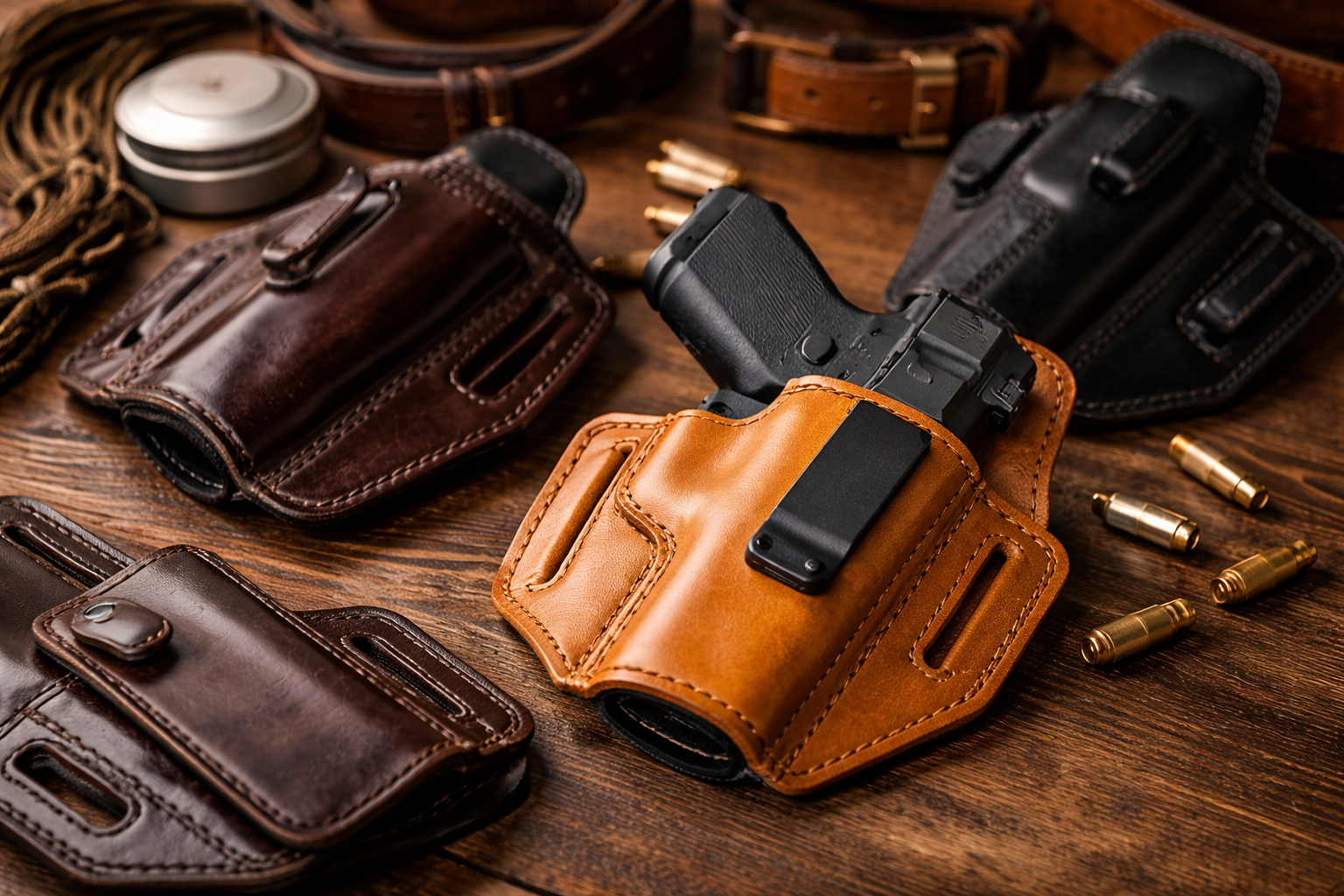
Leather has served as working material for centuries because of its structure and natural resilience.
High-quality leather uses tightly packed fibers that resist tearing and stretching. Proper thickness supports firearm weight and prevents collapse around the trigger guard.
Leather develops patina rather than surface breakdown. Scuffs blend into texture. The material softens slightly while maintaining structure.
Leather flexes without cracking when conditioned properly. Stitching often fails long after the leather itself when craftsmanship is solid.
With routine care, leather holsters and belts often remain functional for:
Synthetic gear includes nylon, polymer blends, and molded plastics.
Factory production creates uniform thickness and shape. This helps with short-term consistency.
Synthetic surfaces do not absorb sweat or rain. This limits odor buildup and water damage.
Over time, repeated bending creates stress points. Heat can soften structure. Cold temperatures may increase brittleness.
Synthetic gear often performs well early but shows decline through:
Most synthetic holsters and belts last:
Material performance shifts based on conditions.
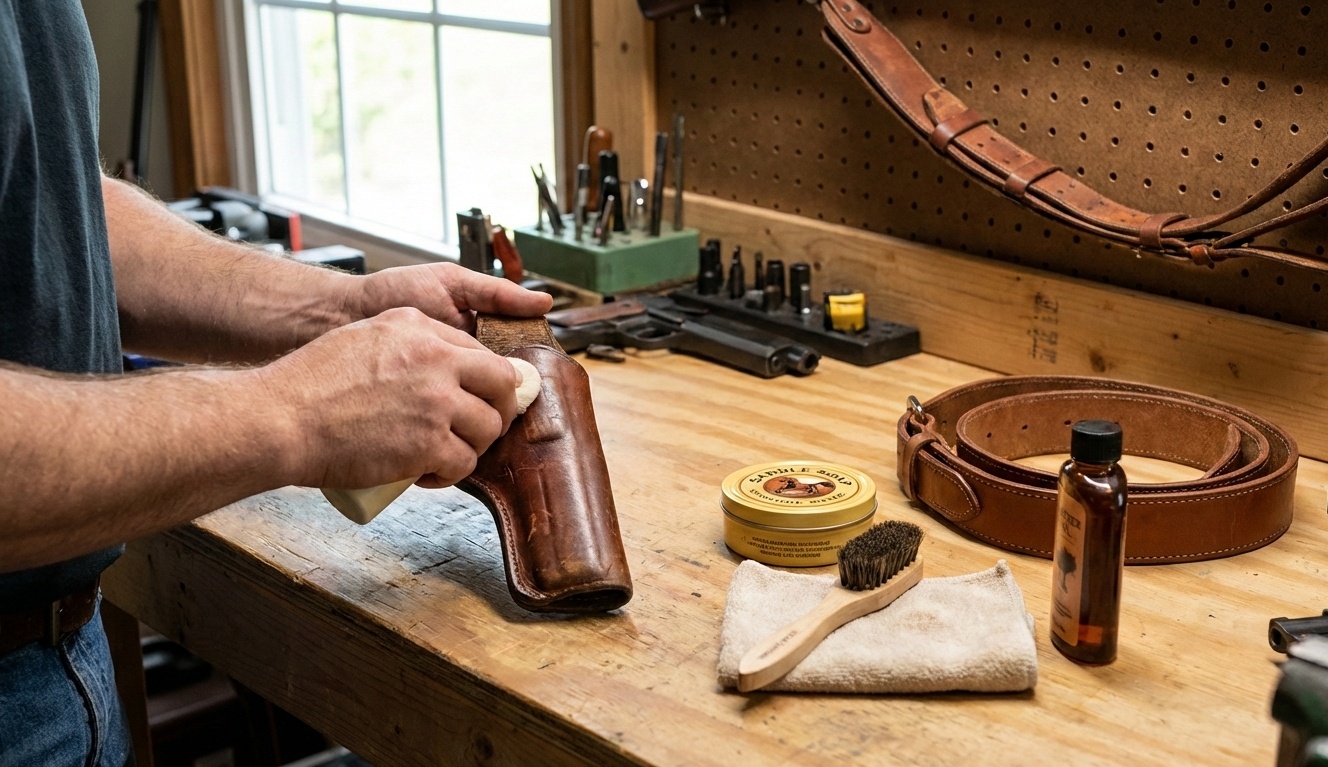
Durability depends heavily on care habits.
Leather requires care but rewards it with extended lifespan.
Durability connects closely to comfort.
Leather molds to body shape gradually. Pressure spreads evenly. Edges soften.
Synthetic materials keep fixed form. Pressure stays concentrated in contact zones. This leads to faster surface fatigue in high-friction areas.
Holster safety depends on retention and trigger coverage.
Leather:
Synthetic:
| Factor | Leather Gear | Synthetic Gear |
|---|---|---|
| Average lifespan | 5–10+ years | 2–5 years |
| Heat tolerance | High with care | Moderate |
| Cold tolerance | High | Moderate |
| Moisture handling | Needs drying | Naturally resistant |
| Retention stability | Strong long-term | Declines over time |
| Repairability | High | Limited |
| Comfort aging | Improves | Often declines |
Upfront pricing does not reflect total ownership value.
Over ten years, leather often costs less through fewer replacements.
Leather excels due to comfort, retention stability, and long wear tolerance.
Leather collars and leads resist abrasion and maintain structure under load.
Both materials function well short-term. Leather maintains shape longer.
Synthetic gear offers moisture resistance, with shorter long-term lifespan.
Material behavior over years matters more than marketing claims.
Longevity depends on material structure, craftsmanship, and care. Leather endures through fiber density, gradual shaping, and repair potential. Synthetic gear performs well early, then declines as stress accumulates. For daily carry, working gear, and equipment expected to last for years, leather continues to deliver consistent performance under real-world conditions. Material choice shapes safety, comfort, and reliability long after the first day of use.