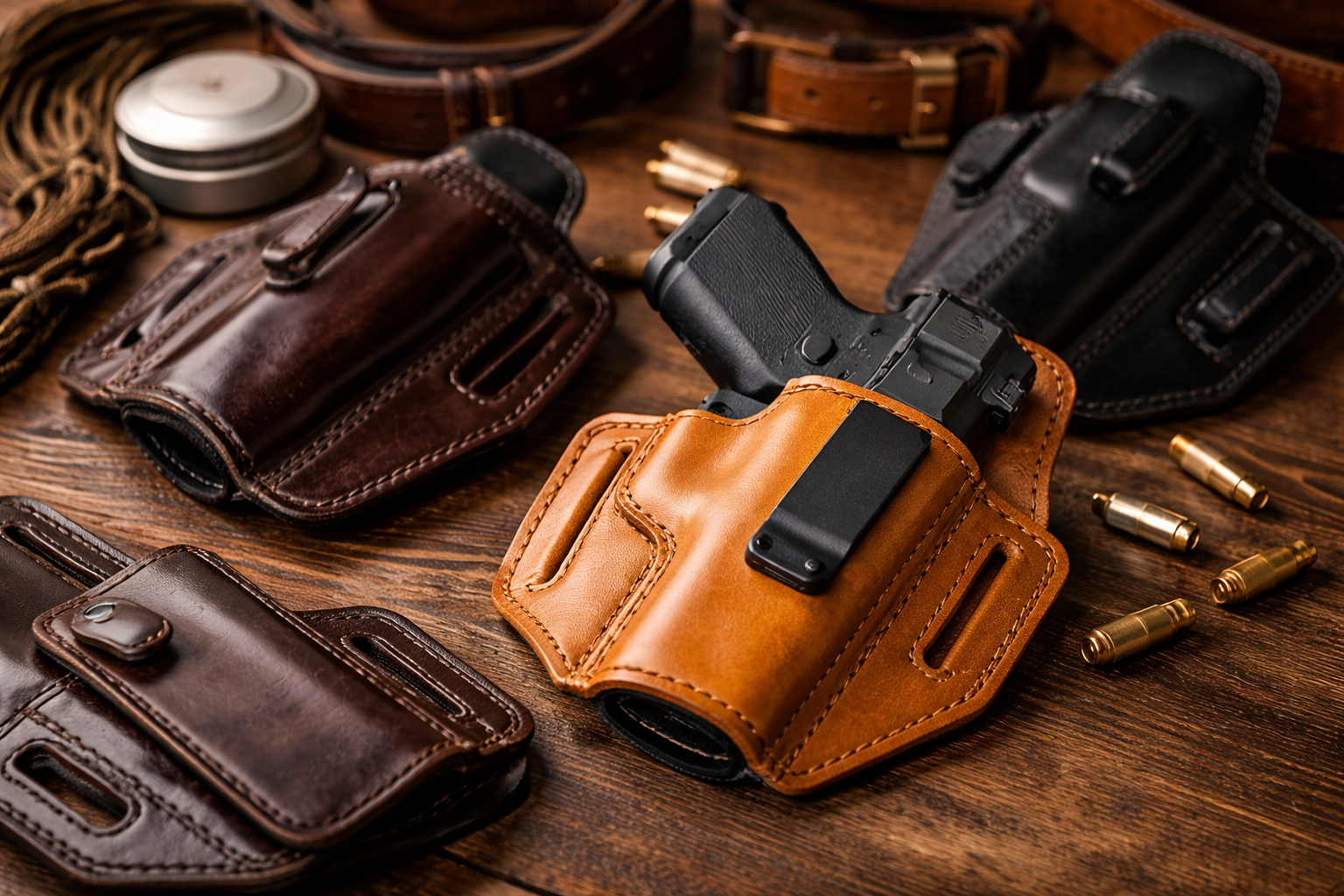
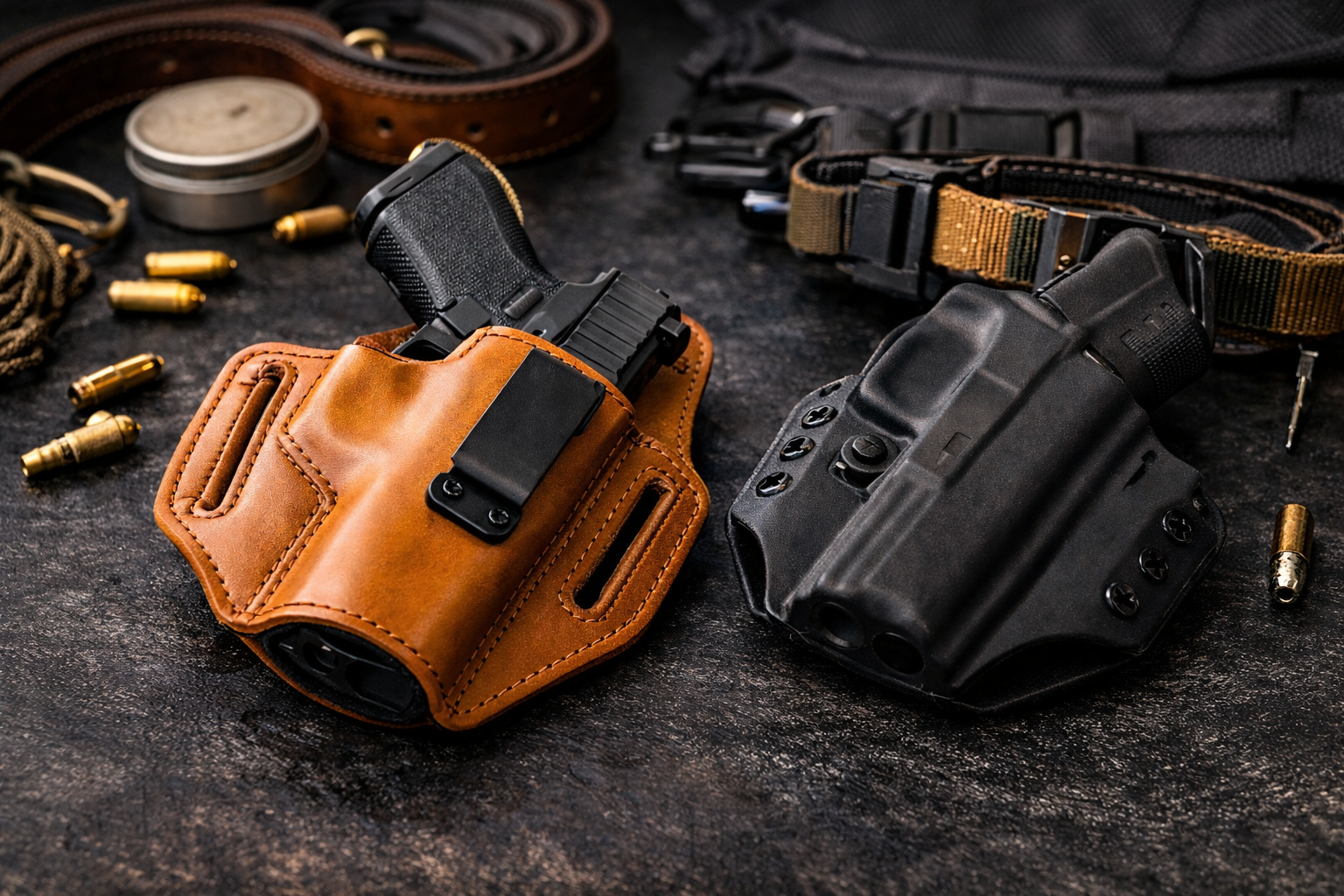
Carrying a firearm daily comes with real responsibility. Comfort, safety, access, and durability all depend on the holster you choose. Leather remains a favorite for everyday carry because it balances strength with comfort while aging gracefully over time.
This guide walks through the key factors that matter when selecting a leather holster that fits your lifestyle and carry needs.
Why Leather Holsters Remain Popular
Leather holsters offer a blend of structure and flexibility that many carriers value.
They mold to the body over time, creating a natural fit that reduces pressure points during long hours of wear. High-quality leather also maintains its shape, protecting the trigger guard and keeping the firearm stable.
Common reasons people prefer leather include:
- Comfortable against the skin
- Durable with proper care
- Quiet during movement
- Classic appearance
- Reliable retention when properly formed
Carry Style Comes First
Your preferred carry position determines the type of holster you should consider.
Inside the Waistband (IWB)
IWB holsters sit between the body and the waistband.
They provide strong concealment and work well for compact and full-size handguns. Comfort depends heavily on leather thickness and edge finishing.
Outside the Waistband (OWB)
OWB holsters ride on the belt outside the pants.
They offer faster access and added comfort due to less body contact. Concealment relies on clothing choice.
Appendix Carry
Appendix holsters sit at the front of the waistline.
They demand careful attention to trigger protection, ride height, and cant angle for safety and comfort.
Shoulder and Crossdraw
Less common but useful for drivers or seated work environments.
They require proper strap design and firearm balance to avoid strain.
Fit Is Non-Negotiable
A quality leather holster is molded to a specific firearm model.
Loose or generic sizing leads to:
- Poor retention
- Inconsistent draw
- Increased wear on the firearm
- Safety concerns
Always confirm:
- Exact firearm make and model
- Sight height compatibility
- Optic cut support if applicable
- Threaded barrel clearance if needed
Retention: Secure Without Resistance
Retention refers to how firmly the holster holds the firearm.
Leather achieves this through molding and tension points rather than mechanical locks. You should feel firm resistance during the draw while still maintaining smooth movement.
A proper test:
- Insert the unloaded firearm
- Hold the holster upside down
- Shake gently
The firearm should stay in place.
Leather Quality Matters More Than Branding
Not all leather is equal.
Look for:
- Full-grain or top-grain leather
- Consistent thickness
- Tight stitching
- Smooth interior finish
- Reinforced mouth opening
Avoid:
- Thin, floppy leather
- Rough interior surfaces
- Weak belt slots
- Loose thread spacing
Cheap leather loses shape quickly, reducing safety and lifespan.
Belt Compatibility
Your holster is only as strong as the belt supporting it.
Confirm:
- Slot width matches your belt
- Leather thickness supports the firearm weight
- Reinforced loops or stitching
A heavy handgun paired with a weak belt creates shifting and discomfort throughout the day.
Comfort Over Long Hours
Comfort determines consistency. If the holster feels painful after two hours, it will not get worn daily.
Consider:
- Rounded edges
- Sweat guard height
- Backing width
- Ride height adjustment
- Cant angle
Small design differences make a noticeable impact during extended wear.
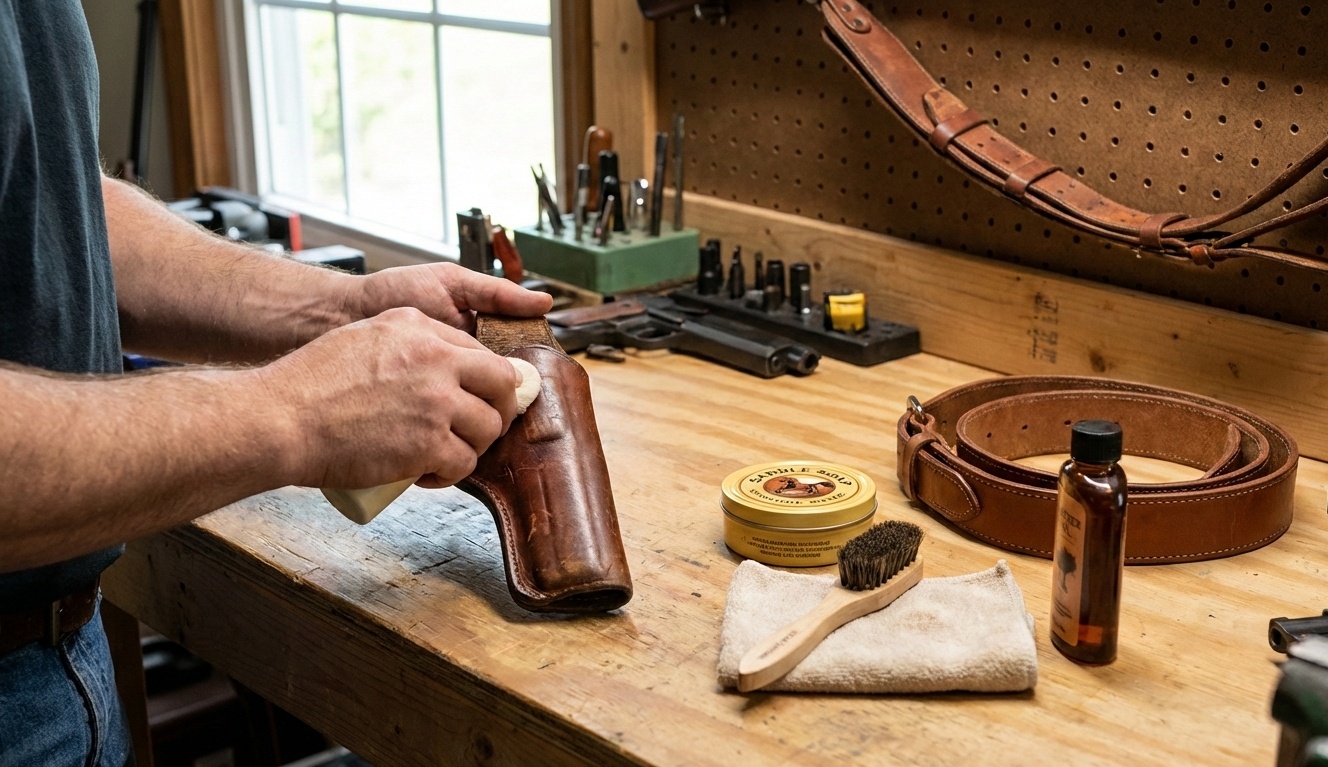
Maintenance Extends Lifespan
Leather gear lasts for years with simple care.
Maintenance basics:
- Wipe clean weekly
- Condition lightly every few months
- Avoid soaking
- Allow air drying
- Store unloaded in a dry area
Neglect leads to cracking, softening, or loss of retention.
Quick Comparison Table
| Feature |
Why It Matters |
| Firearm-specific fit |
Improves safety and retention |
| Leather thickness |
Affects durability and comfort |
| Carry position support |
Determines accessibility |
| Reinforced mouth |
Allows one-handed reholstering |
| Stitch quality |
Prevents early failure |
| Belt slot strength |
Stabilizes draw |
Common Buying Mistakes
Many first-time buyers focus on appearance instead of function.
Avoid these issues:
- Choosing generic sizing
- Ignoring belt compatibility
- Buying soft leather with no reinforcement
- Skipping retention testing
- Selecting style over daily comfort
Final Thoughts
A leather holster is not a fashion accessory. It is safety equipment that supports a serious responsibility.
Choosing one requires attention to fit, construction, carry position, and comfort. When those elements work together, everyday carry becomes consistent, secure, and dependable.
Invest time in selecting the right holster now, and your daily experience will reflect that decision for years to come.